Data Center
Data Center – Project Definition
The data center within our project is more than a collection of servers and cables. It is a tightly coupled, multi-layered environment in which physical conditions, hardware systems, and virtualized services continuously influence each other. A cooling failure can cascade into hardware instability; a hardware change can disrupt the virtualized workloads that depend on it; a spike in virtual resource demand can reveal unplanned gaps in physical capacity. These dependencies are real, operational, and consequential.
Yet in most organizations, the three layers that make up a data center are managed as separate domains — with different teams, tools, and information structures. This separation is where operational risk accumulates.
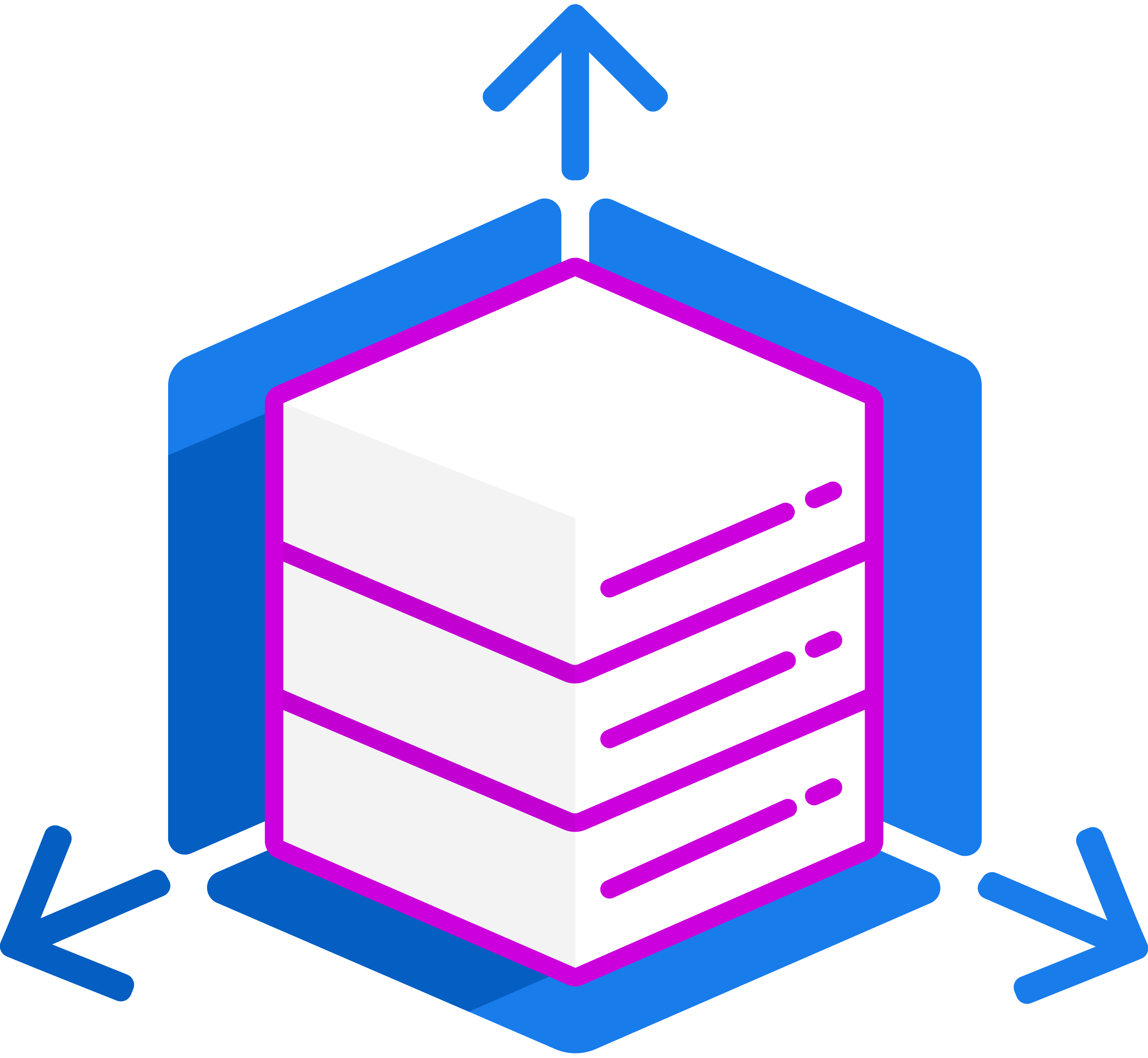
Our project defines the data center as an integrated environment composed of three interconnected pillars:
1. Facility (Physical Infrastructure Layer)
This pillar covers all foundational physical systems required to operate a data center. It includes:
- Power supply and distribution
- Cooling systems
- Building and environmental management
- Physical layout and supporting infrastructure
Facility conditions are the base of all data center operations. Changes here — in temperature, power capacity, or physical layout — directly influence hardware behavior and system availability. Without visibility into this layer, issues in higher layers become difficult to diagnose correctly.
2. Hardware Layer (Rack & Equipment Operations)
This domain focuses on the physical IT systems located within the data center, including:
- Server racks and compute nodes
- Storage systems
- Networking hardware and cabling
- Supporting components and maintenance processes
The hardware layer is the bridge between the physical environment and the digital workloads running above it. Its performance depends on facility conditions below and determines what virtualized services can run above. Changes here propagate in both directions.
3. Virtualization & Software Layer (Digital Services Layer)
This pillar includes all software-defined resources such as:
- Virtual machines and hypervisors
- Container platforms
- Cloud environments
- Orchestration and management tools
This layer abstracts physical hardware into flexible, scalable services. Its operational behavior is shaped by the hardware it runs on — and ultimately by the physical conditions that support that hardware. Problems here often have root causes in lower layers that remain invisible without a connected view.
The Challenge: Fragmentation and Information Loss
In most organizations, these three pillars operate independently. They use different tools, terminology, workflows, and reporting structures. This often results in:
- Lack of transparency across layers
- Misaligned planning cycles
- Incomplete or delayed information
- Inefficiencies in operations and troubleshooting
- Unclear responsibilities and missing coordination paths
Information frequently gets lost between teams — or arrives too late to support correct decision-making. When a virtual service degrades, the cause may lie in a hardware event that no one connected to a facility condition reported days earlier.
Our Approach: Connecting the Pillars
IDCM bridges the gaps between Facility, Hardware, and Virtualization through a combination of three core technologies — each addressing a different dimension of the problem.
The Digital Twin and Asset Administration Shell (AAS) create a unified, semantic data layer that spans all three pillars. Each asset — whether a cooling unit, a server rack, or a virtual workload — is represented in a structured, machine-interpretable form. The AAS connects authoritative data sources across layers without replacing existing systems, ensuring that information is consistent, interoperable, and always traceable to its origin.
Extended Reality (XR) transforms this connected data layer into a spatial, explorable environment. Instead of navigating separate dashboards for each pillar, operators can traverse a unified virtual representation of the data center, observe cross-layer dependencies visually, and understand how changes in one domain affect the others. XR makes the invisible connections between facility, hardware, and virtualization tangible and navigable.
Together, these technologies transform a previously fragmented environment into a connected, collaborative ecosystem — where every team works from the same shared understanding of the infrastructure they operate.